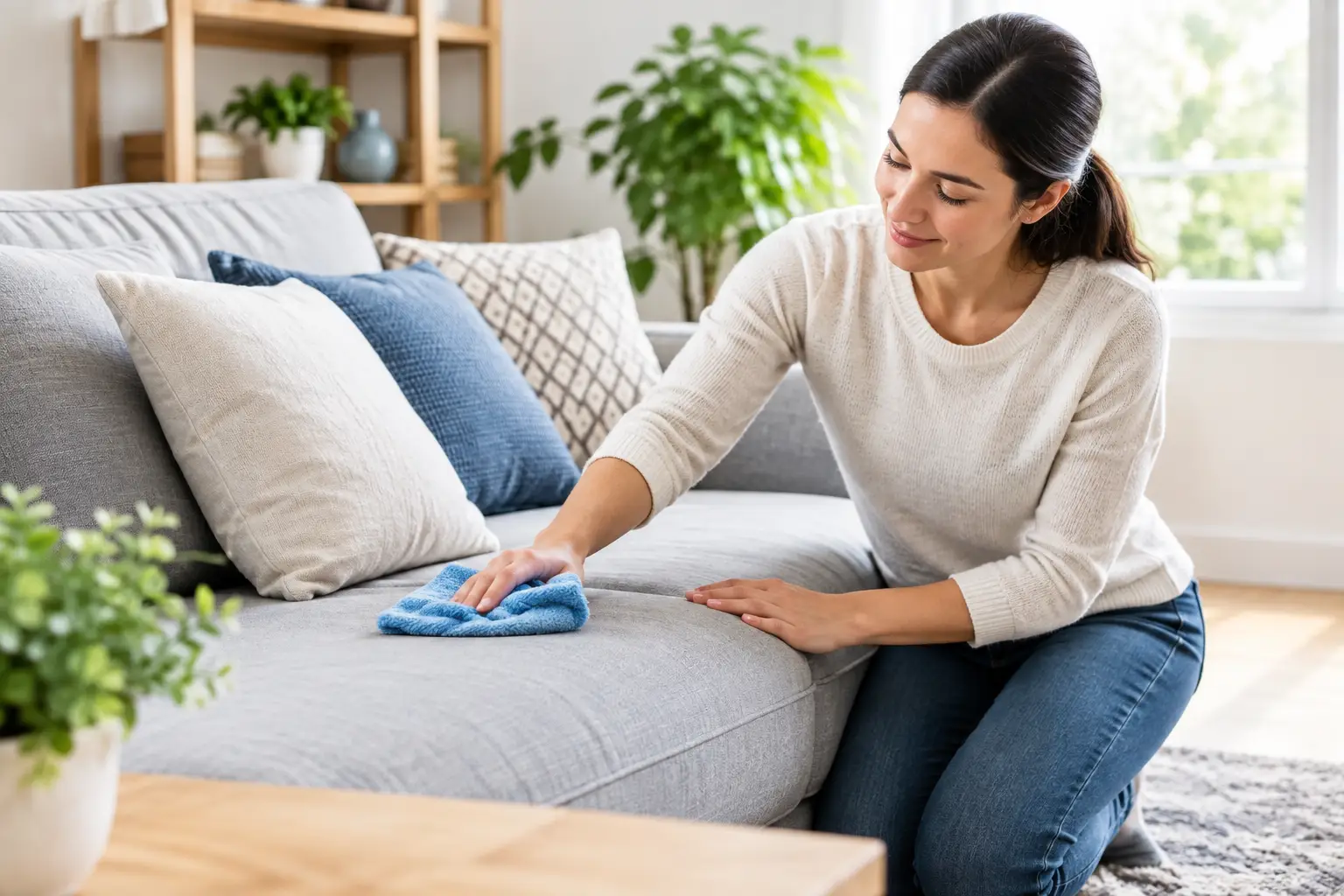
A sofa is where real life happens: movie-night snacks, coffee before work, children’s art projects, visiting friends, and pets claiming their favorite cushion. To protect sofa from spills, you need more than a quick reaction when a drink tips over. The best results come from choosing the right upholstery, creating a few smart household habits, and keeping professional-grade protection in place before an accident occurs.
For Memphis-area families, this is less about keeping a home too precious to enjoy and more about preserving an investment without adding another chore to the day. A well-protected sofa is easier to maintain, looks better between cleanings, and gives you more time to enjoy your home without worrying about every cup of juice.
Start With the Fabric You Have
Not all upholstery handles moisture the same way. Before using a cleaner, spray, or stain-removal trick, find the manufacturer’s cleaning code on the sofa tag. It is often tucked beneath a seat cushion or on the frame.
A code marked W generally allows water-based cleaning methods. S means solvent-based products only, while WS can handle either option. An X means vacuuming or professional cleaning is the safer choice. These codes are not just suggestions. Using too much water on an S-coded fabric, for example, can leave rings, distort fibers, or set the stain deeper into the material.
Fabric construction matters, too. Tightly woven synthetic fabrics are often more forgiving than cotton, linen, rayon, velvet, or delicate blends. Natural fibers can absorb spills quickly, and some dark or richly colored fabrics may bleed if aggressively treated. Leather has its own needs: it should be conditioned and protected with products made specifically for leather, not saturated with water or household spot removers.
If you are buying a new sofa for a busy household, ask about performance fabrics and the manufacturer’s care instructions before selecting a color. A durable fabric is helpful, but no fabric is completely spill-proof without prompt care and the right protection.
Apply Upholstery Protection Before the First Spill
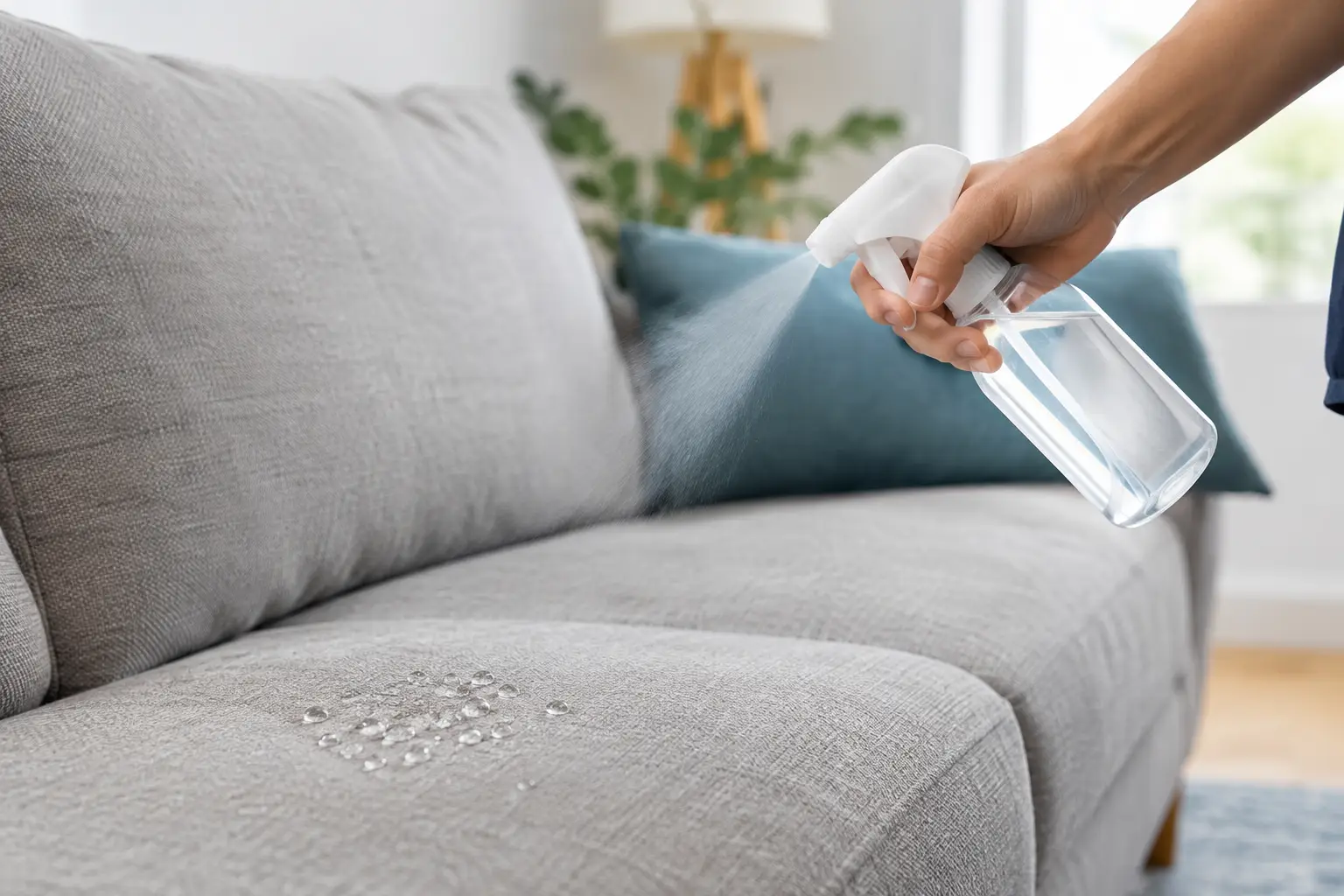
A quality fabric protector does not create a plastic coating over your upholstery. Properly applied protectant helps individual fibers resist absorbing water- and oil-based soils as quickly. That extra time can make the difference between blotting up a spill and dealing with a permanent stain.
Professional applications such as Fiber ProTector® are designed for upholstery fibers and applied with the fabric type, condition, and use of the furniture in mind. This is especially helpful for sectionals, dining chairs, light-colored sofas, and pieces that see daily use from children or pets.
Protection is not permanent. Normal use, vacuuming, spot cleaning, body oils, and professional cleaning can gradually reduce its effectiveness. A sofa that is cleaned regularly may benefit from reapplication afterward, particularly in households where spills are common. Think of fabric protection as preventive maintenance, much like sealing tile and grout or caring for hardwood floors. It helps prevent avoidable damage before it becomes expensive restoration work.
Build Simple Habits That Protect a Sofa From Spills
The goal is not to ban snacks from the living room. It is to make spills less likely and easier to manage when they happen. Use drinks with lids around upholstered furniture when possible, especially for children. Keep a stable side table within reach so cups are not balanced on sofa arms or cushions. For family movie nights, serving snacks in shallow bowls instead of loose handfuls reduces crumbs and greasy residue.
Throws can be useful on favorite pet spots or the seat where everyone relaxes, but choose washable covers that are easy to remove. A blanket is not a substitute for upholstery protection, and it should not remain in place long enough to hide soil beneath it. Wash it regularly and vacuum the sofa underneath.
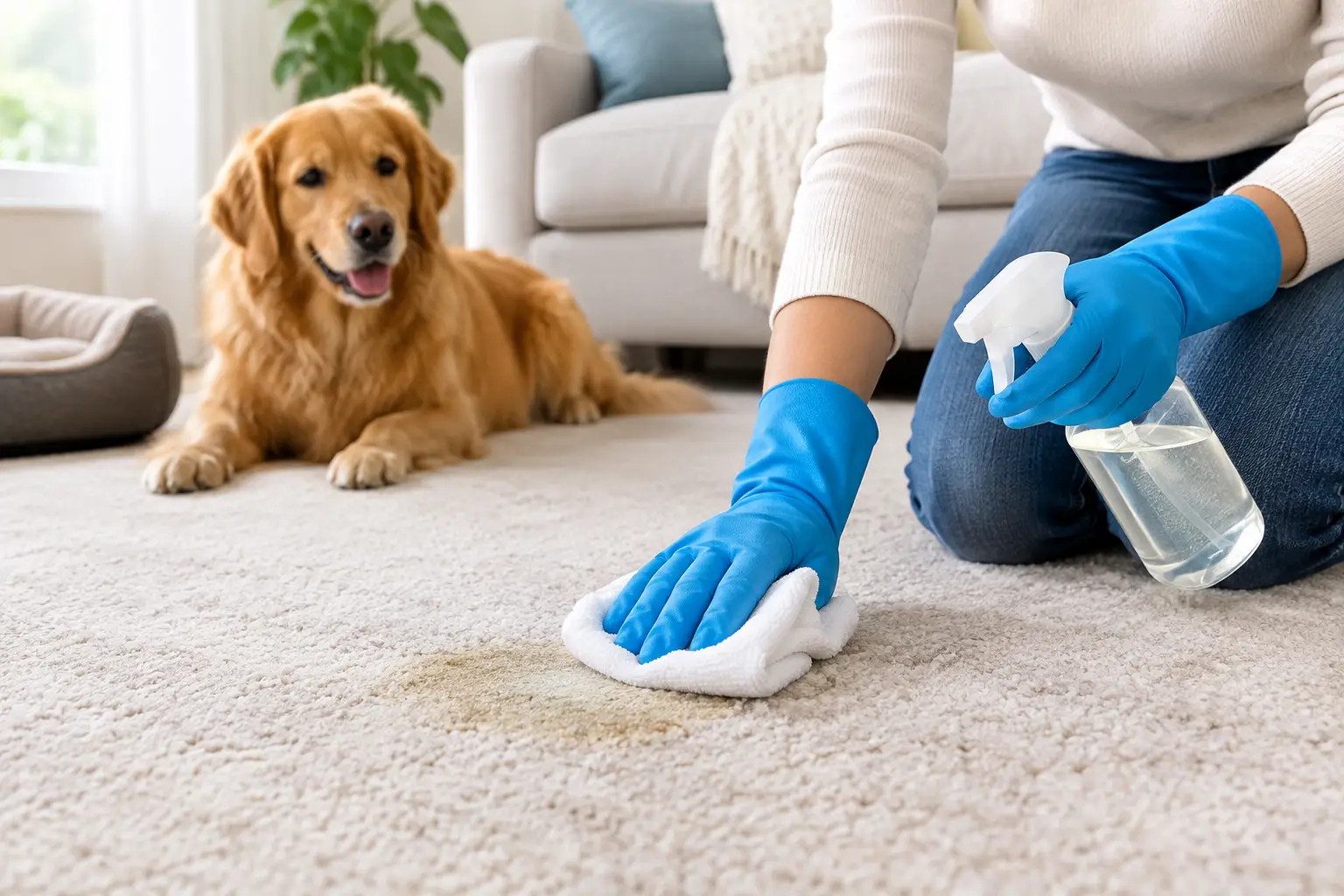
For homes with pets, wipe paws after wet walks and address accidents quickly. Pet urine is not simply a surface stain. It can move through upholstery fibers and padding, leaving odor behind even after the visible spot disappears. When that happens, surface sprays may mask the problem but rarely solve it. A professional odor treatment that reaches the affected materials is often the more reliable path to a truly clean result.
What to Do the Moment Something Spills
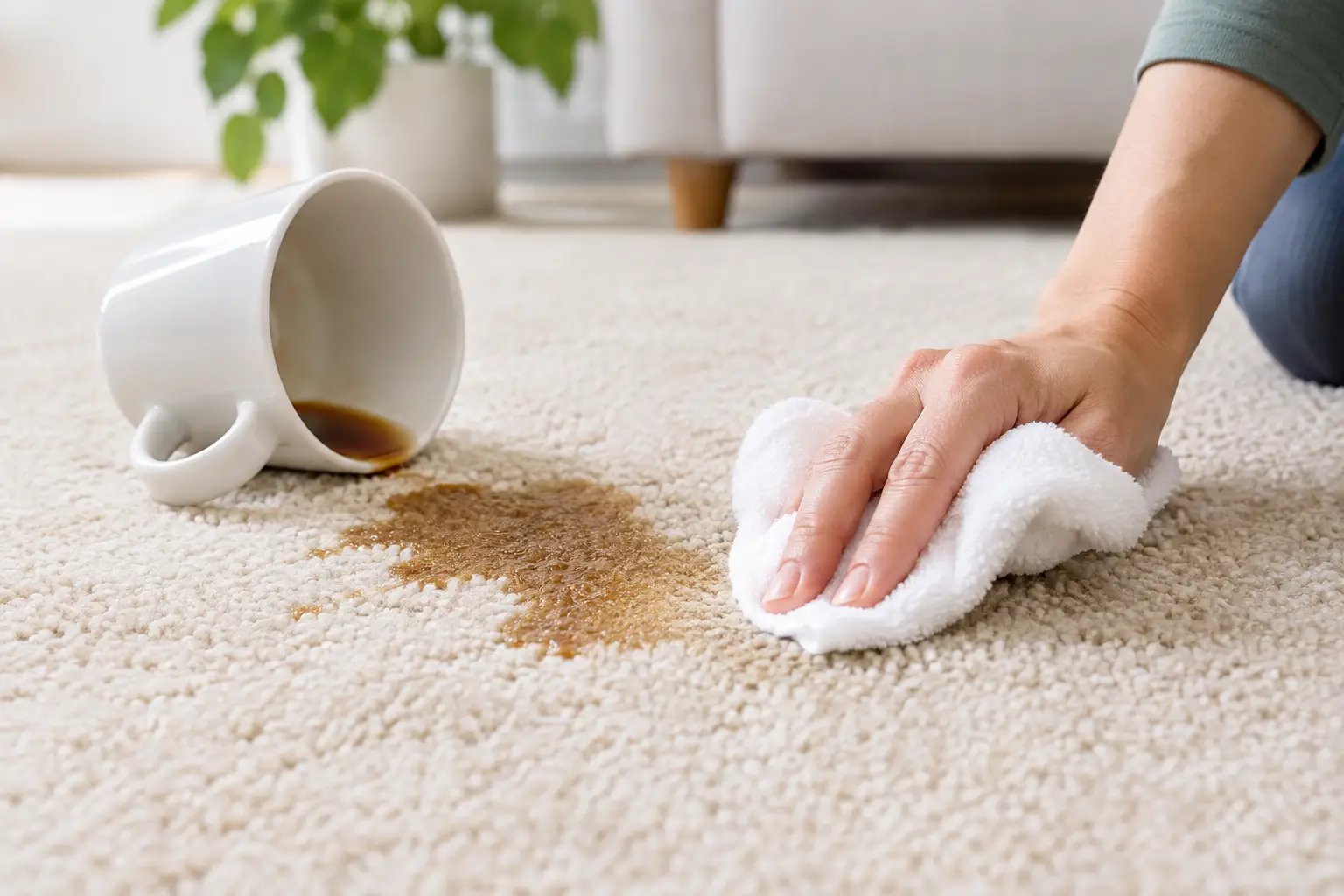
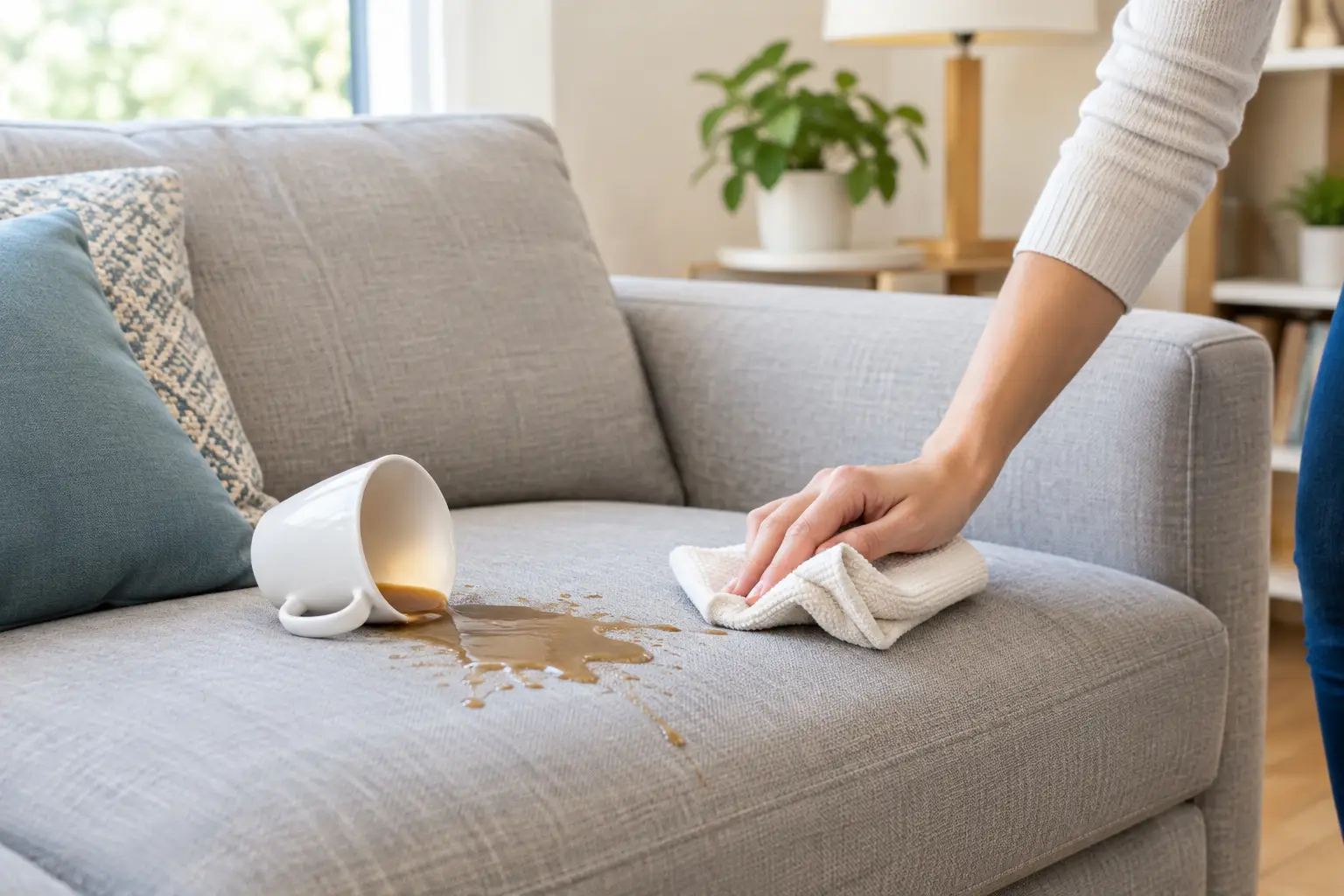
Speed matters, but panic usually leads to rubbing, oversaturating, or using the wrong product. Start by gently lifting away any solids with a spoon or dull edge. Then blot the spill with a clean, white, absorbent towel. Press straight down and rotate to a dry section of the towel as moisture transfers. Do not scrub back and forth.
Scrubbing can push a stain deeper into the cushion, fray delicate fibers, and spread the affected area. It can also create a noticeable texture difference after the fabric dries. Blot from the outside edge toward the center to keep the spill contained.
For a fresh water-based spill on a fabric labeled W or WS, use only a small amount of clean water on a white cloth if blotting alone does not remove the residue. Avoid soaking the fabric. Too much moisture can wick into the cushion, cause a water ring, or leave behind a musty odor if it does not dry thoroughly.
Oil, butter, salad dressing, cosmetics, and greasy foods require more caution. Water may not remove them, and household dish soap can leave a sticky residue that attracts more dirt. Solvent-cleanable fabrics need products formulated for that purpose. When you are unsure of the fabric code or the stain type, stop after blotting and call a professional. Saving the fabric is worth more than experimenting with a cleaner from under the kitchen sink.
Avoid These Common DIY Mistakes
A few popular stain-removal shortcuts can turn a manageable spill into a permanent issue. Bleach and harsh all-purpose cleaners can strip color or weaken upholstery fibers. Vinegar may be appropriate for certain cleaning situations, but it is not a universal upholstery solution and can affect dyes or finishes. Baking soda can help absorb odor in some cases, yet turning it into a wet paste may leave a residue that is difficult to remove from fabric.
Steam cleaning is another area where more is not always better. Heat can set protein stains such as milk, egg, or pet accidents. Excessive moisture can reach the padding and make drying slow, particularly in humid weather. A sofa may look clean on the surface while moisture and soil remain below it.
Always test any approved product in an inconspicuous area first. Let it dry completely before deciding whether the color and texture are unchanged. If the spot is in a highly visible area, is older than a day or two, or includes red wine, ink, pet waste, coffee, or grease, professional cleaning is usually the safer decision.
Keep Soil From Becoming a Spill Problem
Not every upholstery problem begins with a dramatic accident. Everyday body oils, dust, pet dander, food crumbs, and airborne soil gradually settle into fabric. As that buildup grows, the sofa can look dull and feel rougher, and a later spill has more material to bond with.
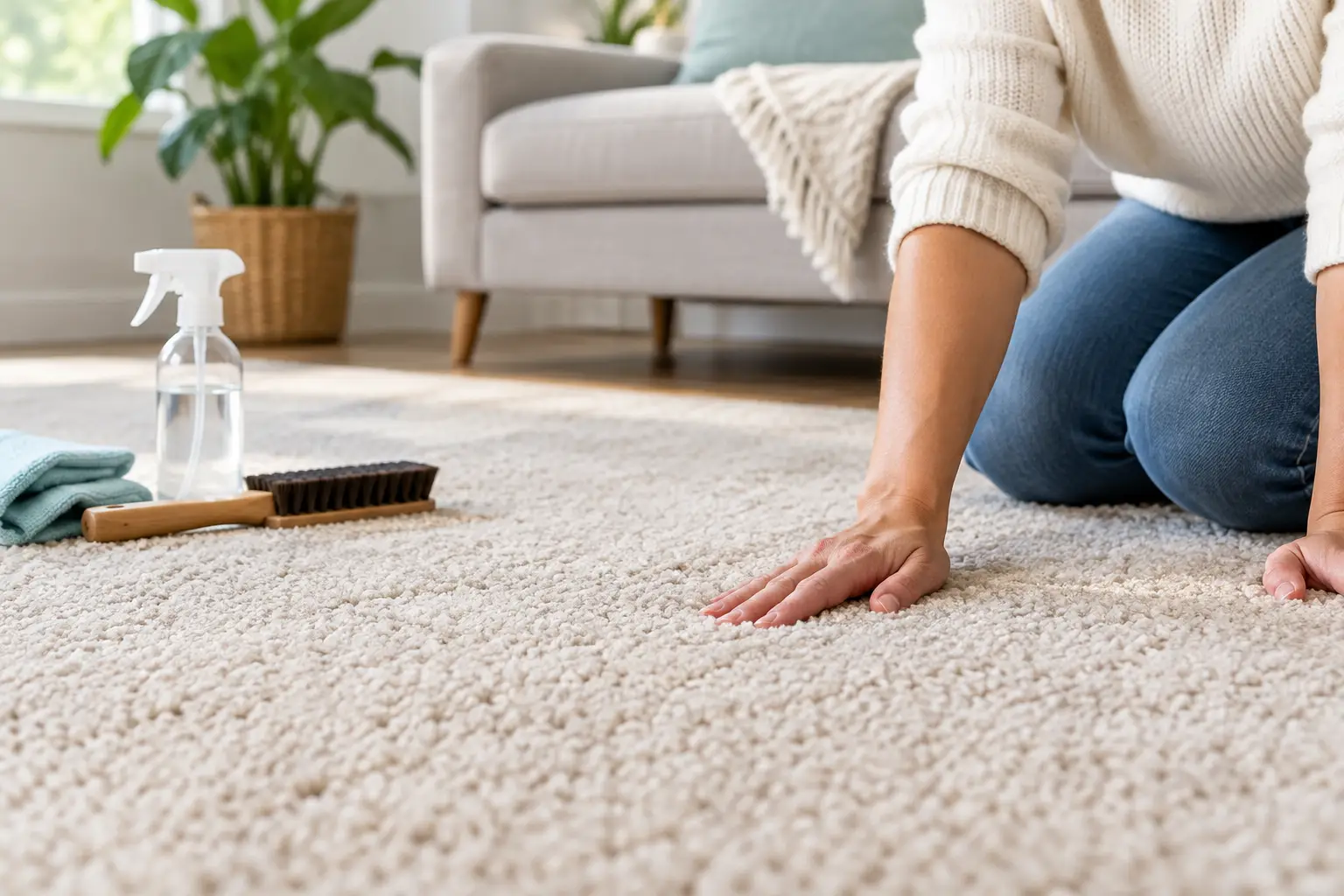
Vacuum upholstered furniture with a soft brush attachment every week or two, including beneath the cushions and along seams. Rotate and fluff removable cushions according to the manufacturer’s instructions to distribute wear. For light-colored fabrics, this routine can make a noticeable difference in how long the sofa keeps its fresh appearance.
Professional upholstery cleaning removes the embedded soil that vacuuming cannot reach and can refresh the fibers without relying on overly wet, one-size-fits-all methods. PSH Floorcare evaluates upholstery by fiber type and condition, then uses surface-appropriate cleaning and protection options to help families keep their furnishings cleaner and easier to care for.
Know When It Is Time for Professional Help
Call for help when a spill has soaked through the cushion, leaves a lingering odor, returns after drying, or causes discoloration around the edges. These are signs that the problem may be below the surface. The same applies to older stains that have been repeatedly treated at home. Layering products onto a stain can make professional correction more challenging.
A trained technician can identify the fabric, assess the source of the stain, and select a method that protects the upholstery rather than taking unnecessary risks. That level of care matters for heirloom pieces, high-end sectionals, delicate fabrics, and furniture that supports the daily rhythm of your household.
Your sofa does not need to look untouched to look cared for. With prompt blotting, sensible habits, reliable fabric protection, and professional cleaning when needed, it can remain a comfortable gathering place for the messy, memorable moments that make a house feel like home.