A rug can look mostly fine after a plumbing leak, overflowing washer, or stormwater intrusion, yet damage may already be developing underneath. Water damaged rugs can hold moisture deep in the fibers, backing, and pad long after the surface feels dry. That trapped moisture can lead to dye bleed, odors, shrinking, mildew, and damage to the hardwood, laminate, or subfloor below.
The best outcome usually comes down to speed and handling. A valuable wool rug needs a different response than a machine-made synthetic area rug, and a clean supply-line leak calls for a different plan than water from a toilet backup or flood. Acting quickly protects your investment and helps keep a stressful household problem from becoming a larger restoration project.
What to Do First When a Rug Gets Wet
Start by stopping the source of water if it is safe to do so. Shut off the supply valve for a leaking appliance or sink, move furniture off the rug, and keep people and pets away from the affected area. If water is near electrical outlets, cords, or appliances, do not enter the area until it is safe.
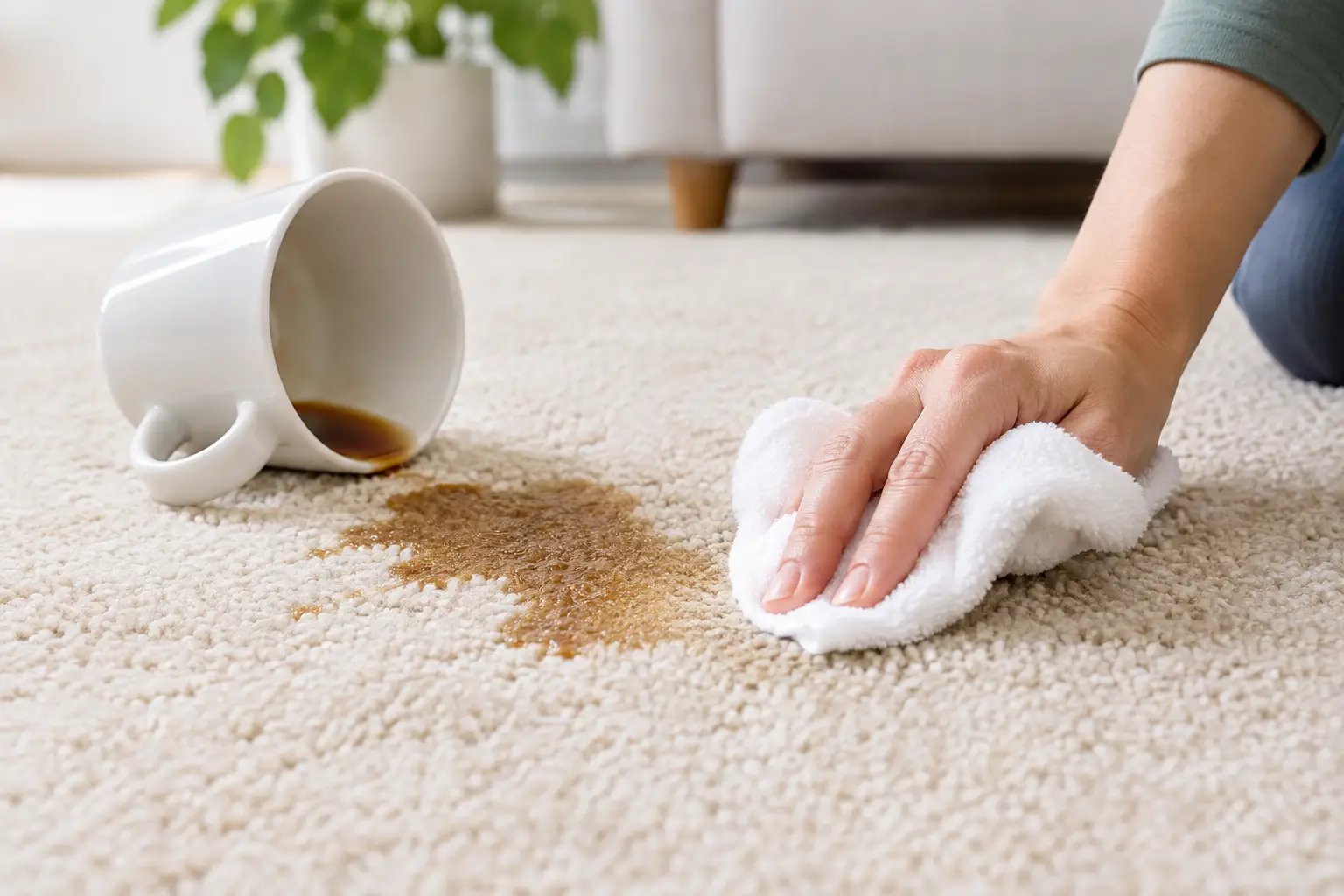
Next, document the situation. Take clear photos of the rug, the affected floor, nearby furnishings, and the source of the water. This can be useful for insurance documentation, especially after a burst pipe or roof leak. Then blot or extract standing water with clean towels or a wet-dry vacuum if the water is known to be clean. Do not scrub the rug. Scrubbing can drive soil deeper into the pile, distort fibers, and spread unstable dyes.
If the rug can be moved without dragging it across a wet floor, place it in a dry, ventilated area. Avoid folding it while wet. Folds trap moisture and can create permanent crease marks, dye migration, and uneven drying. A soaked rug is also far heavier than it looks, so use help rather than risking an injury or tearing the rug's foundation.
Do not rely on a fan alone for a heavily saturated rug. Fans are helpful for the surrounding room, but they do not remove the water embedded in a rug's foundation or pad. The floor beneath it must be evaluated and dried, too.
Water Damaged Rugs Are Not All the Same
The source of the water matters as much as the amount. Clean water from a supply line, rain entering through a briefly open window, or a fresh appliance leak may allow for a more straightforward recovery if addressed quickly. Even then, the rug needs thorough washing and controlled drying to remove dissolved soil and prevent odor.
Gray water, such as water from a washing machine, dishwasher, or overflowing sink, carries more contaminants. Professional cleaning is strongly recommended because soils and residues can settle into the rug's fibers and backing.
Black water is the most serious category. Water from a sewage backup, toilet overflow involving waste, outdoor flooding, or a drain backup may contain bacteria, viruses, and other contaminants. Do not attempt to clean a contaminated rug in your bathtub or on the driveway. Depending on the contamination level, fiber type, construction, and value, professional assessment may determine whether safe restoration is practical or whether disposal is the responsible choice.
That distinction can feel frustrating when a rug has sentimental value. Still, health and safety need to come first, particularly in homes with children, pets, older adults, or anyone with respiratory sensitivities.
Why Drying a Rug at Home Can Go Wrong
A damp rug placed in the sun may seem like a sensible solution, but uncontrolled drying brings risks. Direct heat can shrink wool, crack latex backing, curl edges, fade color, and cause dyes to run. Hanging a heavy wet rug over a railing can stretch the foundation and leave stress lines.
Area rugs are built in layers. The face fibers may dry first while the cotton foundation, latex, jute, or secondary backing remains wet. That hidden moisture is where musty odors often begin. If the rug was sitting on carpet, a rug pad, hardwood, or laminate, moisture may also remain below the rug and create a separate flooring concern.
Wool and silk rugs deserve particular caution. Wool has natural resilience, but it can brown, shrink, felt, or bleed when mishandled. Silk is even less forgiving. Certain antique, hand-knotted, oriental, and viscose rugs should be handled with specialized processes from the start rather than treated with household cleaners or rental equipment.
When Professional Rug Cleaning Is the Better Choice
A professional assessment is wise when the rug is saturated, smells musty, has visible staining or dye bleed, came into contact with contaminated water, or has a wool, silk, viscose, hand-knotted, or antique construction. It is also the safer option if the rug has been wet for more than 24 to 48 hours.
In-plant rug cleaning is especially valuable because it allows the rug to be cleaned in a controlled environment rather than rushed through a surface cleaning in the home. Proper care can include pre-inspection, dust removal, colorfastness testing, full washing appropriate to the fiber type, careful rinsing, odor treatment when needed, controlled drying, and final grooming. The goal is not simply to make the rug look better. It is to remove the moisture, soil, and residues that can shorten its life.
At PSH Floorcare's Rug Tub division, rugs are handled as individual textiles, not as interchangeable pieces of flooring. That surface-specific approach matters when protecting the color, feel, and structure of a rug you chose for your home.
Protect the Floor Beneath the Rug
Removing the rug is only part of the job. Check the rug pad and floor beneath it right away. Many pads hold a surprising amount of water, and some can transfer color or leave a sticky residue when wet. In many cases, a saturated pad should be replaced rather than reused.
For hardwood and laminate, time is critical. Water can seep between boards or beneath plank edges, leading to cupping, swelling, or separation. Tile may appear unaffected, but moisture can still remain in grout lines or beneath loose tiles. Carpet under an area rug may require extraction and drying before the rug is returned.
Do not put a cleaned rug back onto a floor until both the rug and the underlying surface are completely dry. Replacing it too soon can restart the odor and moisture problem, even after professional cleaning.
Avoid These Common Mistakes
Household spot removers, bleach, and strong disinfectants are rarely appropriate for water-damaged rugs. They can discolor fibers, weaken wool, remove protective finishes, and create residues that attract more soil later. Steam cleaning can also add moisture to an already saturated rug if the extraction is not powerful enough.
Avoid rolling up a wet rug and leaving it in a garage, basement, or vehicle while deciding what to do. That warm, enclosed environment gives odor-causing microbes an ideal place to grow. Likewise, do not assume a rug is safe because the top feels dry. The underside tells a more complete story.
If an odor remains after drying, it is a sign to investigate rather than cover it with fragrance. Odor is often evidence of moisture, contamination, or residue still in the rug or floor system.
A Faster Response Can Save a Favorite Rug
Some water events are unavoidable. A failed hose, overflowing tub, pet accident near a rug pad, or Memphis storm can catch any household off guard. What you do in the first few hours can make a meaningful difference in whether a rug can be restored and how much disruption the event causes.
Move quickly, keep the water source and rug construction in mind, and give saturated or contaminated rugs the specialized care they require. A rug that is properly cleaned, dried, and returned to a fully dry floor can continue doing what it was meant to do: make your home feel comfortable, cared for, and ready for everyday life.